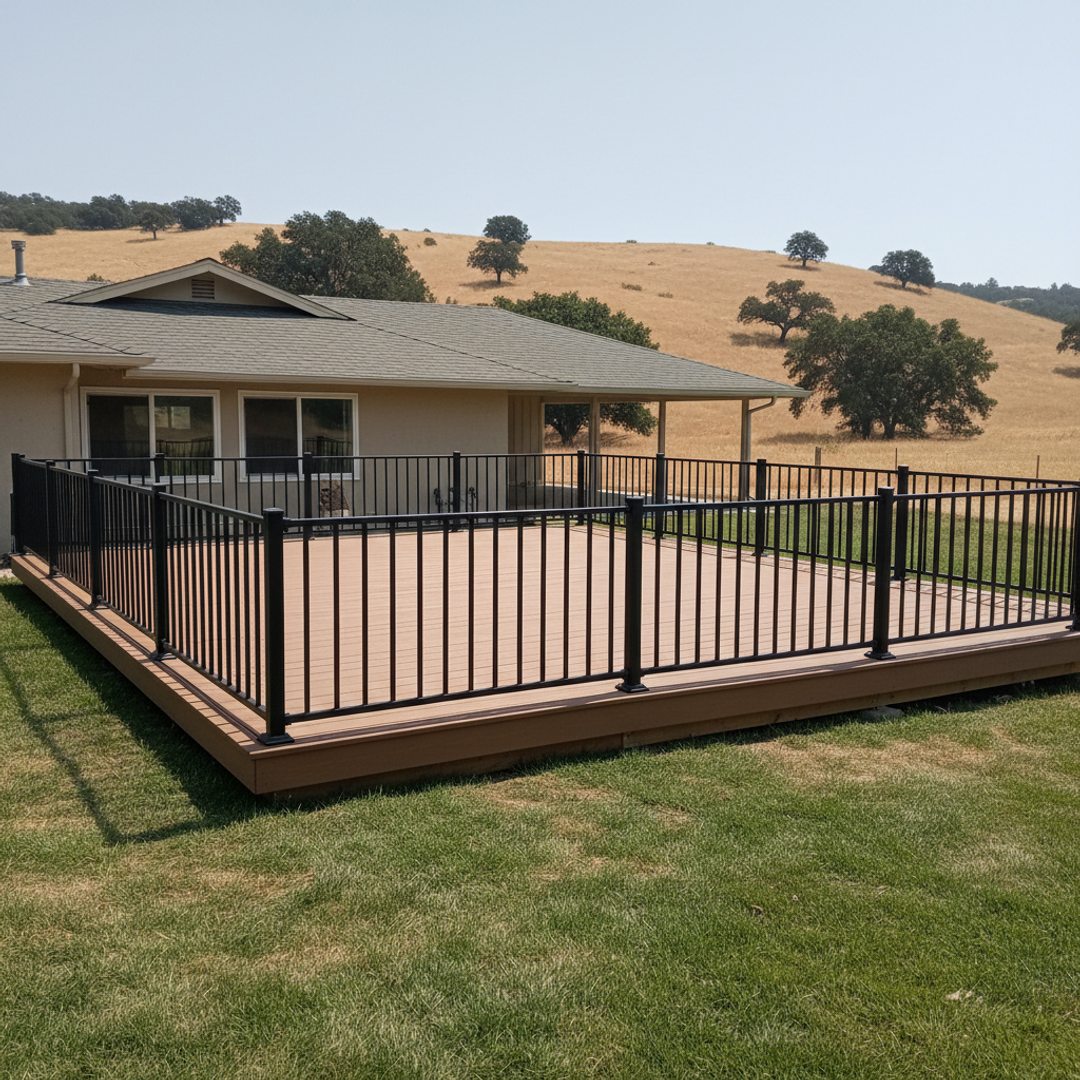
Most deck problems don't show up on day one. They show up two summers later, when a post has shifted, a board has cupped, or the railing has started to wobble. A lot of that can be headed off before the first footing goes in the ground. Here's what's worth looking at first, whether you're building new, replacing an old deck, or just fixing what's there.
1. What the soil under the deck is actually doing
A lot of Fresno is sitting on clay or clay-loam soil that expands when it's wet and shrinks hard when it dries out. Add a sprinkler head or a drip line six inches from a footing and you've got a cycle of swelling and shrinking every time that zone runs. Footings poured too shallow, or poured without enough bearing below the active zone, will heave or settle unevenly over a few seasons. For most residential decks here, footings need to go down past the frost line, which isn't really the concern in this climate, but past the zone where seasonal moisture swings move the soil, generally 12 to 18 inches depending on the deck's load and height. If there's a sprinkler system anywhere near the footprint, that's worth rerouting before concrete goes in, not after.
2. How close the irrigation runs to the ledger and posts
Related to the soil issue, but worth checking on its own: a ledger board that's getting hit by a rotor head twice a day is going to take on moisture behind the flashing no matter how well the deck was built. Same with posts sitting in a mulch bed that stays damp. Pull back the landscaping a foot or two from any wood post, and point the sprinkler heads away from the structure, not toward it.
3. The ledger board attachment, if the deck is attached to the house
This is where a lot of older decks fail, and it's invisible until you pull the boards. The ledger needs proper flashing between it and the house sheathing, lag bolts or structural screws at the right spacing, not nails, and a gap or flashing detail that keeps water from sitting against the house framing. On a lot of Fresno homes built in the 60s through the 80s, especially around the Tower District, Fig Garden, and older Clovis streets, the original ledger attachment was done to a much lower standard than current code requires. If you're resurfacing or repairing an older deck, it's worth pulling a board or two near the house wall just to see what's actually holding it on.
4. Permits and setbacks, before material gets ordered
Most deck work in the City of Fresno and in unincorporated Fresno County needs a building permit once the deck is above a certain height off grade, usually around 30 inches, though lower decks can still need one depending on attachment to the house and railing requirements. The city or county will check footing depth, ledger attachment, railing height, and guard spacing during inspection, usually with a framing inspection before decking goes down and a final after railings are up. If the property is in a newer subdivision, especially north Fresno or Clovis developments like Copper River or Harlan Ranch, there's a good chance there's an HOA with its own setback and material rules on top of the city's. Older Fresno neighborhoods generally don't have an HOA to deal with, but setback from the property line still applies, and a quick check against the lot survey saves a headache later.
5. What kind of wood or composite is actually going to survive the summer
Fresno runs over 100°F for stretches of June through September, with very low humidity. That combination is hard on materials in a specific way. Pressure-treated lumber that isn't fully dried before it's installed will shrink and twist as it loses moisture in that heat, opening gaps and sometimes cupping boards within the first year. Composite decking handles the heat better structurally, but dark-colored composite can get hot enough to be uncomfortable barefoot by early afternoon in July, which matters if there's a pool or a lot of bare feet on it. Cedar and redwood look good going in but need a stain or sealer reapplied more often here than in a milder climate, because UV exposure in the Central Valley is intense almost year-round.
6. Whether the old deck needs full demolition or just resurfacing
Not every tired-looking deck needs to come out. If the framing, posts, and footings are sound and square, resurfacing with new boards over the existing structure is faster and cheaper. But if there's any rot at the posts, any sign the ledger has pulled away from the house even slightly, or if the joists are undersized for what's being asked of them now, that's a different job. Tearing out an old deck usually takes a day or two for a typical backyard deck. Getting the footings and framing right the second time is where the real time goes.
7. Post and footing condition on anything over ten or fifteen years old
Wood posts set directly in concrete, rather than sitting on top of a post base bracket, trap moisture at the base and rot from the inside out. You often can't see it until you push on the post and feel some give. On older Fresno decks this is one of the most common repair calls, and it's rarely isolated to one post once you find it on one.
8. Railing height and spacing, especially if kids or guests will use the deck
Current code generally calls for guard rails at 36 inches minimum for residential decks, with baluster spacing that won't allow a 4-inch sphere to pass through. A lot of decks built before these rules tightened up are sitting at 30 inches with wider gaps. If a deck is getting resurfaced or repaired, it's worth checking railing height and spacing even if that wasn't the original reason for the call.
9. Drainage underneath and around the deck
Fresno doesn't get much rain, but when it does, usually between November and March, it tends to come in short, heavier bursts rather than steady drizzle. A deck built low to the ground without any slope away from the house, or without a gap for water to clear the joists, can hold standing water under the boards for days after a storm. That moisture sitting against joists and posts is what accelerates rot in a climate that's otherwise dry enough to prevent it.
10. What's buried where the posts need to go
Before any digging, an 811 utility locate call is standard and usually takes a few business days to get marked out. On older lots, there's also a decent chance of finding an old sprinkler line, a abandoned gas line from a prior addition, or a septic leach field remnant on properties that were converted to city sewer decades ago. Worth knowing before a post hole turns into an unplanned repair.
None of this is complicated, but most of it only gets caught by someone who's dug a lot of post holes in this particular soil and seen what this particular climate does to a deck over a few years. If you want a second set of eyes on an existing deck, or you're starting from scratch and want it built for how Fresno actually behaves, that's the kind of work we do at Coastal Deck Solutions.